Showing posts with label Poland. Show all posts

Tuesday, January 4, 2022

, , , ,

The EU must not become a lawless zone – appeal of European academics


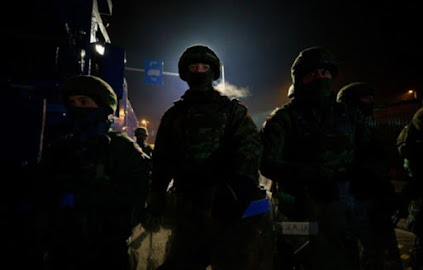
For a brief moment, the situation at the Polish-Belarusian border has attracted public attention. The images of thousands of refugees from Iraq, Syria, Yemen and elsewhere, who were lured by the Belarussian President Lukashenko and assembled on the Belarusian side of the border in inhumane conditions, sparked outrage among European audiences. Geopolitical analyses have been put forward, political and repressive responses have been formulated (sanctions, border militarization).


But today, the humanitarian drama continues on both sides of the border, and no adequate response has been found. Since September 2021, the Polish government declared an emergency zone along its border with Belarus. Migrants who enter the EU by crossing the Polish-Belarusian border have found themselves in a dangerous militarized area to which doctors, journalists, and representatives of NGOs do not have access. In the Białowieża Forest, one of the last remaining old-growth forests in Europe, men, women, and children are dying of hypothermia, thirst, hunger, and lack of access to lifesaving medical aid. 


Polish border guards systematically ignore their requests for asylum and return them to the Belarusian side of the border. The practice of refoulement is prohibited even in times of crisis by the 1951 Geneva Convention relating to the status of refugees (article 33), the European Convention on Human Rights (art. 3) and its Protocol 4 (art. 4), as well as the Charter of Fundamental Rights of the European Union (articles 18 and 19), all of which the European Union and its Member States have a duty to respect. 


Forced by Belarusian soldiers to cross the border, some families have been sent back more than ten times or separated, which has exacerbated the intolerable human dramas taking place in the border areas. On the 19th November 2021, the Commissioner for Human Rights of the Council of Europe, Dunja Mijatović, called for access to humanitarian aid, including international assistance, and reiterated the urgency of stopping the systematic violation of human rights in the border areas. NGOs such as Grupa Granica or Human Rights Watch have published thorough reports on these violations. The MEP Pietro Bartolo, otherwise known as Lampedusa’s “migrant doctor”, reported "massive violations of human rights, of the rule of law, of conventions", "an atmosphere of terror", and "a humanitarian disaster". 


On December 1st, 2021, The European Commission responded by proposing(based on Article 78 § 3 of the Treaty on the Functioning of the European Union) that the Council adopt emergency measures to enable the EU Member States concerned to manage the crisis. However, instead of reaffirming the fundamental nature of the right to apply for asylum, the proposal effectively authorises the Polish, Lithuanian and Latvian authorities to apply the accelerated border procedure to all asylum applications. It thus makes it less likely that the asylum requests of these populations in dire need of protection will be considered and supports the legalisation of mass expulsions. Yet, the events we are witnessing are not a "migration crisis". The few thousand people at the border are a small group whose presence has been politically instrumentalised and dramatised. Although this situation poses no proven "emergency", the creation of the no-go zone in Poland threatens the daily life and economic subsistence of tens of thousands of locals who reside in the border area. 


The Commission’s proposal is a threat to all EU citizens. Supporting such illegal measures empowers authoritarian governments to establish lawless zones in Europe. The European Union, which was founded on the rule of law and on the defence of fundamental rights, simply cannot compromise with these principles. 


The EU’s very future is playing out today in the Białowieża Forest. We call on the Council of the European Union to renounce the legalisation of these derogations from treaties that require Member States of the EU to protect human rights. We call on the European Union to lead with a humane response to the humanitarian crisis that is playing out on the borders with Belarus, and for immediate actions to be taken to protect vulnerable individuals and to respect the right of asylum.


This is not a question of giving lessons about morals to any particular country. A number of EU countries can be criticised for their failings in respecting fundamental rights. Countries do have a right to control their borders. But in the face of illegal and inhumane practices that persist and increasingly become institutionalised, it is urgent to restate the law’s universal and fundamental rules. We, citizens of the EU, must affirm and defend these rights because, in a democracy, only the law can protect us against arbitrary decisions.


First signatories


Joana Abrisketa (Titular de Derecho Internacional Público, University of Deusto)

Michel Agier (Directeur d'études, EHESS)

Anca Ailincai (Professeure, Université Grenoble Alpes)

Denis Alland (Professeur, Université Panthéon-Assas, Paris 2)

Nuria Arenas (Associate Professor of Internacional Law, University of Huelva)

Idil Atak (Associate Professor, Ryerson University, Toronto)

Géraldine Bachoue (Associate Professor, Université de Pau et des pays de l'Adour)

Ségolène Barbou des Places (Professeure, Université Paris 1 Panthéon-Sorbonne)

Jan Barcz (Professor, Kozminski University, Warsaw)

Pavel Barša (Professor, Charles University, Prague)

Paul Bauer (Faculty of Social Sciences, Charles University, Prague)

Annette Becker (Professor em., Université Paris Nanterre)

Valentin Behr (Researcher, Institut d'études avancées de Paris)

Mounia Bennani-Chraïbi (Professeure ordinaire, Université de Lausanne)

Marcel Berlinghoff (Researcher, Institute for Migration Research and Intercultural Studies (IMIS), Osnabruck University

Annett Bochmann (Wissenschaftliche Mitarbeiterin, Universität Siegen)

Yasmine Bouagga (Senior researcher, CNRS)

Stefanie Börner (Professor, Otto-von-Guericke-Universität Magdeburg)

Laurence Burgorgue-Larsen (Professeure, Université Paris 1 Panthéon-Sorbonne)

Sebastian Büttner (Assistant Professor, Friedrich-Alexander-Universität Erlangen-Nürnberg)

Tiziana Caponio (Associate Professor, University of Turin)

Jean-Yves Carlier (Professeur, Université Louvain La Neuve)

Aurore Chaigneau (Professor, Université Paris Nanterre)

Isabelle Chort (Professeure, Université de Pau et des pays de l'Adour)

Dimitris Christopoulos (Professor, Université Panteion d'Athènes).

François Crépeau (Professor, Université McGill)

Karolina Czerska-Shaw (Assistant Professor, Jagiellonian University)

Dorota Dakowska (Professeure, Sciences Po Aix)

Mathilde Darley (Senior researcher, CNRS)

Emilio De Capitani (Professeur, Department of Law at Queen Mary University of London)

Marion Detjen (Researcher, Bard College Berlin)

Laurent Dornel, (Associate Professor, Université de Pau et des pays de l'Adour)

Marie-Elizabeth Ducreux (Senior Researcher, EHESS)

Estelle d'Halluin (Maîtresse de conférences, Université de Nantes)

Pauline Endres de Oliveira (Research assistant, Justus Liebig University)

Anuscheh Farahat (Professor, Friedrich-Alexander-Universität Erlangen-Nürnberg)

Julian Fernandez (Professor, Université Paris 2)

Kamila Fiałkowska (Researcher, Centre of Migration Research, University of Warsaw)

Thibaut Fleury Graff (Professeur, Université Paris-Saclay)

Karolina Follis (Senior Lecturer, Lancaster University)

Naika Foroutan (Professor, Humboldt-Universität zu Berlin)

Étienne François (Professeur ém., Université Paris 1 Panthéon Sorbonne et Université libre de Berlin)

Heidrun Friese (Professor, Chemnitz University of Technology)

Thomas Gammeltoft-Hansen (Professor, University of Copenhagen)

Paula García Andrade (Professor, Comillas Pontifical University)

Lucyna Gebert (Professeure, Sapienza Università di Roma)

Petia Georgieva (Associate Professor, New Bulgarian University)

Mihai Dinu Gheorghiu (Professeur em., Alexandru Ioan Cuza University of Iasi)

Camille Goirand (Professeure, Université Sorbonne nouvelle)

Cristina Gortázar Rotaeche (Professor, International Law, Pontifical University Comillas)

Jan Gross (Professor of history emeritus, Princeton university)

Barbara Grabowska-Moroz (Researcher, Central European University, Budapest)

Paul Gradvohl (Professeur, Université Paris 1 Panthéon-Sorbonne)

Łukasz Gruszczyński (Associate Professor, Koźmiński University, Warsaw)

Carolus Grütters (Researcher, Centre for Migration Law, Radboud University, Nijmegen)

Halina Grzymała-Moszczyńska (Professor, Uniwersytet Jagielloński)

Joanna Grzymała-Moszczyńska (Researcher, Uniwersytet Jagielloński)

Laetitia Guilloud-Colliat (Professor, Université de Grenoble)

Elspeth Guild (Professor, Radboud University Nijmegen, Netherlands, College of Europe)

Virginie Guiraudon (Directrice de recherche, Sciences Po Paris)

Gábor Halmai (Professor, European University Institute)

François Héran (Professeur, Collège de France)

Sabine Hess (Professor, Institute for Cultural Anthropology, University of Göttingen and director of the Center for Global Migration Studies)

Béatrice Hibou (Research Professor, CNRS)

Béatrice von Hirschhausen (Directrice de recherche, CNRS)

Christian Ingrao (Directeur de recherche, CNRS)

Yasemin Karakaşoğlu (Professor, University of Bremen, Member of Rat für Migration e.V.)

Niilo Kauppi (Directeur de Recherche CNRS, Université de Strasbourg)

Audrey Kichelewski (Associate Professor, Université de Strasbourg / IUF)

Marta Kindler (Assistant Professor, University of Warsaw)

Tomasz Kitliński (Researcher, Margherita von Brentano Zentrum, Freie Universitaet Berlin)

Witold Klaus (Professor, Institute of Law Studies, Polish Academy of Sciences)

Dimitry Kochenov (Professor, Central European University)

Jerzy Kranz (Professor, Kozminski University, Warsaw)

Ireneusz Krzemiński (Professor, University of Warsaw)

Katarzyna Kubin (Jun. Res., School of Oriental and African Studies, University of London)

Katarzyna Kubuj (Senior Researcher, Institut of Law Studies, Polish Academy of Sciences)

Lidia Kuzemska (PhD in Sociology, Lancaster University)

Pascale Laborier (Professor, Université Paris Nanterre)

Evelyne Lagrange (Professor, Université Paris 1 Panthéon-Sorbonne)

Martine Leibovici (Associate Professor ém., Université de Paris)

Stephan Lessenich (Professor, Goethe-Universität Frankfurt am Main/Institut für Sozialforschung

Danièle Lochak (Professeure ém., Université Paris Nanterre)

Kamil Łuczaj (Wyższa Szkoła Informatyki i Zarządzania, Rzeszów)

Benoît Majerus (Professor, Université du Luxembourg)

Izabella Main (Associate Professor, Université de Poznan)

Alexis Marie (Professeur, Université de Bordeaux)

Alfio Mastropaolo (Professor em., University of Turin)

Steffen Mau (Professor, Humboldt Universität zu Berlin)

Rostane Mehdi (Professeur, Sciences Po Aix)

Anne-Sophie Millet-Devalle (Professor, Université Côte d'Azur)

Georges Mink (Directeur de Recherche Émérite, ISP-CNRS)

Caroline Moine (Maîtresse de conférences, Université Paris-Saclay)

Małgorzata Molęda-Zdziech (Associate Professor, Warsaw School of Economics, SGH)

Tamás Molnár (Visiting lecturer, Corvinus University of Budapest)

Laura Montanari (Professor, Université d'Udine)

Janusz Mucha (Professor, University of Białystok)

Laure Neumayer (Professeure, Université de Picardie Jules-Verne) 

Dariusz Niedźwiedzki (Professor, Instytut Studiów Europejskich, Uniwersytet Jagielloński)

Józef Niżnik (Professor, Institute of Philosophy and Sociology, Polish Academy of Sciences)

Eeva Nykänen (Professor, University of Eastern Finland)

Claus Offe (Professor em., Humboldt Universisty and Hertie School, Berlin)

Michelle Pace (Professor, Roskilde University)

Francesco Palermo (Professor of Comparative Constitutional Law, University of Verona)

Etienne Pataut (Professeur, Ecole de droit de la Sorbonne, Université Paris 1 Panthéon-Sorbonne)

Laurent Pech (Professor, Middlesex University London)

Thomas Piketty (Professor, Paris School of Economics)

Sébastien Platon (Professor, Université de Bordeaux)

Jean-Yves Potel (Researcher ém. Université Paris 8 Vincennes-Saint Denis)

Swanie Potot (Senior researcher, CNRS)

Jenny Preunkert (Gastprofessorin, Universität Duisburg-Essen)

Dominika Pszczółkowska (Associate Professor, University of Warsaw)

Karine Rance (Associate Professor, Université Clermont Auvergne)

Thomas Ribémont (Associate Professor, Université Sorbonne Nouvelle)

Cécile Robert (Professor, Sciences Po Lyon)

Sophie Robin-Olivier (Professeure, Ecole de droit de la Sorbonne, Université Paris 1 Panthéon-Sorbonne)

Anja Röcke (Gastprofessorin, Humboldt Universität)

Tilmann Röder (Academic coordinator, Freie Universität Berlin)

Paolo Ruspini (Associate Professor, Roma Tre University)

Robert Rydzewski (Researcher, Centre for Migration Studies, Adam Mickiewicz University)

Philippe Rygiel (Senior professor, Ecole Normale Supérieure de Lyon)

Guillaume Sacriste (Associate Professor, Université Paris 1 Panthéon-Sorbonne)

Wojciech Sadurski (Professor, University of Sydney & Uniwersytet Warszawski)

Sylvie Sarolea (Professor, Université Catholique de Louvain)

Dana Schmalz (Senior Research Fellow, Max Planck Institute for Comparative Public Law and International Law, Heidelberg/Berlin)

Camille Schmoll (Associate Professor, EHESS)

Gesine Schwan (Prof. em., former president of European University Viadrina)

Caterina Severino (Professor, Université de Toulon)

Michael Shafir (Professor ém., Université Babeș-Bolyai, Cluj-Napoca)

Angela Siebold (Researcher, Goethe-Universität Frankfurt)

Despina Sinou (Associate Professor, Université Sorbonne Paris Nord)

Serge Slama (Professeur, Université Grenoble Alpes)

Lieneke Slingenberg (Associate professor Vrije Universiteit Amsterdam)

Thomas Spijkerboer (Professor of Migration Law, Vrije Universiteit Amsterdam)

Justyna Struzik (Assistant Professor, Jagiellonian University)

David Szymczak (Professeur, Sciences Po Bordeaux)

Przemyslaw Tacik (Assistant Professor, Jagiellonian University)

Bérangère Taxil (Professor, Université d’Angers)

Romain Tinière (Professeur, Université Grenoble Alpes)

Anna Triandafyllidou (Professor, Ryerson University)

Elsa Tulmets (Europa Universität Viadrina)

Jan Váška (Assistant Professor, Charles University, Prague)

Antoine Vauchez (Directeur de recherche, CNRS)

Jakob Vogel (Professor, Sciences Po Paris / HU Berlin)

Izabela Wagner (Professor, Collegium Civitas / Institut Convergence Migration / EUI)

Adam Walaszek (Professor, Jagiellonian University)

Edith Wendt (Lecturer, Universität Heidelberg)

Catherine Wihtol de Wenden (Directrice de recherche, CNRS)

Aleksandra Winiarska (Assistant Professor, Uniwersytet Warszawski)

Frank Wolff (Privatdozent, IMIS, Universität Osnabrück)

Anna Wyrozumska (Professor, University of Lodz, Poland)

Frédéric Zalewski (Associate professor, Université Paris Nanterre)

Marjoleine Zieck (Professor of International Refugee Law, University of Amsterdam)


Photo credit: Kancelaria Premiera via Flickr – Creative Commons licence

Continue reading The EU must not become a lawless zone – appeal of European academics

Tuesday, August 10, 2021

, , , , ,

Copyright and the Internet: Poland v Parliament and Council (Case C-401/19), Opinion of the Advocate General, 15 July 2021


Lorna Woods, Professor of Internet Law, University of Essex


Introduction


The development of ‘web 2.0’, especially social media, has meant that many people are able to post content to potentially large audiences.  The amount of content, however, and how to manage conflicting rights between different users has led to debate about the role of the platforms in helping remedy the problems that the platforms facilitate (that come along with the benefits the platforms enable).  One particular issue is the acceptability of the use of filtering technologies, especially from the perspective of the freedom of expression of the user of the work.  It has come before the courts before, when the courts – in the context of copyright claims - had expressed concerns about those techniques.  Given the quantity of material uploaded, however, it is hard to envisage that in person ex post review of content would be possible, let alone effective.  The problem of copyright enforcement remains – and the ‘value gap’ created by mass unauthorised use of protected works. Platforms have had little incentive to prevent the problem from arising – indeed it could be said the platforms benefitted (through advertising revenue) from the existence of this content. The ex post system – whereby copyright holders notify and the platform removes content to maintain its immunity under Article 14 e-Commerce Directive – has not been seen as effective by rights-holders.


This problem had led to the overhaul of the copyright regime and the enactment of the Copyright Directive in the Digital Single Market (Directive 2019/790), a proposal that during the legislative process was subject to extensive lobbying.  The result is a directive which aims to reduce the ‘value gap’ and to rebalance matters more in favour of the creators of content with the introduction of a new press publisher’s right (Article 15) and, notably, Article 17 which covers use of protected content by online content-sharing service providers.  Article 17, however, was contentious, leading to this challenge by Poland, and the recent Advocate-General’s opinion. While it is important in understanding the scope of Article 17 itself, we might also ask whether the reasoning here might have broader implications.


Provisions in Issue


Article 17 changes (or clarifies) the position under copyright that the platforms caught by the definitions in the directive will automatically be considered to be carrying out 'acts of communication to the public or making available to the public' when they give the public access to copyright-protected content uploaded by users, and therefore require authorisation from the relevant content owners. Article 17(3) displaces Article 14 e-Commerce Directive, which provides conditional immunity from penalties to neutral hosts. Article 17(3) provides that, if there are no relevant licensing arrangements in place, the platforms will only be able to maintain immunity if they satisfy the terms of Article 17(4). Article 17(4) introduces 4 cumulative conditions (arranged across 3 subparagraphs) – that the platform has:


(a) made best efforts to obtain an authorisation, and


(b) made, in accordance with high industry standards of professional diligence, best efforts to ensure the unavailability of specific works and other subject matter for which the right-holders have provided the service providers with the relevant and necessary information; and in any event


(c) acted expeditiously, upon receiving a sufficiently substantiated notice from the right-holders, to disable access to, or to remove from their websites, the notified works or other subject matter, and made best efforts to prevent their future uploads in accordance with point (b).


While the first part of Article 17(4)(c) is similar to the conditions in Article 14 e-Commerce Directive, the other three elements are new.  Without dealing with any questions around the definitions of the platforms falling within this obligation, a number of questions arise: does Article 17(4) effectively require upload filters (and will they lead to overblocking); what are best efforts, especially in relation to the monitoring which is implied; and does Article 17(4) effectively require ‘general monitoring’ (despite the clarification in Article 17(8) that it should not lead to general monitoring).


Article 17(7) might be seen as an effort at counter-balance: it provides


The cooperation between online content-sharing service providers and right-holders shall not result in the prevention of the availability of works or other subject matter uploaded by users, which do not infringe copyright and related rights, including where such works or other subject matter are covered by an exception or limitation.


Significantly, the directive expressly lists the exceptions for quotation, criticism, review and for caricature, parody or pastiche.  There are also obligations (in Article 17(9)) relating to redress and complaints mechanisms, which some sections of industry have claimed are onerous.  Some of the vagueness around requirements might be dealt with by Commission guidance aimed at aiding coherent implementation of the directive; while this is now available, at the time the case was lodged it was not.


The Legal Challenge


The Issue


Poland issued a judicial review action, seeking annulment of the provision (either just Article 17(4)(b) and (c) or Article 17 in its entirety) on the basis of its incompatibility with freedom of expression as guaranteed by the Charter (Article 11 EUCFR), either by destroying the essence of the right or by constituting a disproportionate interference with that right.


The Nature of the Obligation


A preliminary issue concerned is the nature of the obligation imposed by Article 17(4) and whether it requires for preventive monitoring purposes the use of upload filters. While this is not explicitly required, the Advocate General took the view that, in many circumstances, the use of those tools are required [para 62]. Further, industry standards will have an impact on the decision as to what best practice is [para 65-6]. So, while the recitals provided considerations to assess what suitable methods would look like (see recital 66), this did not affect the assessment that the reality was the upload filters of some description would be used.


The Impact on Freedom of Expression


Applicability of the Right


One precondition for the applicability of fundamental rights is that the actions under challenge could be imputed to the State; here, the actions of the platforms are in issue (and their right to run a business under Article 16 EUCFR). The Advocate General drew a distinction between the circumstances where a platform had real choice and the circumstances here. The provision might formally give operators a choice: do this and get exemption from liability, or choose not to do that and face exposure to liability. The Advocate General emphasised that the assessment as to compliance with Article 11 should take account of what is happening in practice; the reality is that ‘the conditions for exemption laid down in the contested provisions will, in practice, constitute genuine obligations for those providers’ [para 86, emphasis in original].


Limitations – Lawfulness


The conditions for limiting Article 11 EUCFR are found in Article 52(1) EUCFR. The requirement there that the restriction be ‘provided for by law’ was to be understood in the light of the jurisprudence on lawfulness for the purpose of Article 10(2) ECHR (citing some CJEU decisions on data protection and the right to a private life in support). Lawfulness requires not just a basis in law, clearly satisfied here, but must be accessible and foreseeable. The first aspect is clearly satisfied. As regards the second, the Advocate General noted that the case law allows the legislature ‘without undermining the requirement of “foreseeability” [to] choose to endow the texts it adopts with a certain flexibility rather than absolute certainty’ [para 95, citing the Grand Chamber judgment in Delfi v Estonia, discussed here]. Nonetheless, the case-law on lawfulness also requires safeguards against arbitrary or abusive interference with rights. This issue the Advocate General linked to proportionality.


Limitations – the Essence of the Right


The requirement to respect the essence of the right provides a limit on the discretion of the legislature to weigh up competing interests and come to a fair balance. It is ‘an “untouchable core” which must remain free from any interference’ [para 99]. According to the Advocate General, an ‘obligation preventively to monitor, in general, the content of users of their services in search of any kind of illegal, or even simply undesirable information’ constitutes such an interference [para 104]. Article 15 e-Commerce Directive is ‘a general principle of law governing the Internet’ [para 106, emphasis in original and referring to Scarlet Extended and SABAM], and binds the EU legislature. Importantly, this principle does not prohibit all forms of monitoring; the jurisprudence of the CJEU has already distinguished monitoring which occurs in specific cases, and a similar position can be seen in the case-law of the ECtHR (Delfi). Tracing the development of the CJEU’s reasoning over time from the early cases of L’Oreal, Scarlet Extended and SABAM, through McFadden to Glawischnig-Piesczek(discussed here), the Advocate General opined that Article 17 is a specific monitoring obligation [para 110]; it focuses on specific items of content and the fact that a platform would have to search all content to find it does not equate to a general obligation.


Limitations – Proportionality


After reviewing the first two aspects of proportionality (appropriate and necessary), the Advocate General moved to discuss the heart of the matter:  proportionality strictu sensuand the balance achieved between the conflicting rights.  The Advocate General accepted that it was permissible for the EU legislature to change the balance it had adopted in Article 14 e-Commerce Directive for that in the new Copyright in the Digital Market Directive taking into account the different context, and the broad discretion the institutions have in the complex area. The Advocate General identified the following factors: the extent of the economic harm caused due to the scale of uploading; the ineffectiveness of the notice and take down system; the difficulties in prosecuting those responsible and the fact that the obligations concern specific service providers [para 137].


The next issue whether platforms would take ‘the easy way out’ and over-block just to be on the safe side in terms of their own exposure to liability. The Advocate-General excluded this possibility in his interpretation of the ‘best efforts’ obligation. So, the obligation to take users’ rights into account ex ante and not just ex postsupports the proportionality of the measure; the redress rights and the out-of-court redress mechanism are supplementary safeguards. Service providers may not use any filtering technology but must instead consider the collateral effect of blocking when implementing measures. Systems which block based on just content and not taking into account the legitimate uses would fall foul of the position in Scarlet Extended and SABAM.


This was followed by a consideration of Glawischnig-Piesczek. In the light of the CJEU’s emphasis  on the platform in that case not having to make an independent decision as to the acceptability of content to take down (and to stay down), the Advocate General suggested that platforms cannot be expected to make independent assessments of the legality of content. He concluded:


to minimise the risk of ‘over-blocking’ and, therefore, ensure complaince with the right to freedom of expression, an intermediary provider may, in my view, only be required to filter and block information which has first been established by a court as being illegal or, otherwise, information the unlawfulness of which is obvious from the outset, that is to say, it is manifest, without, inter alia, the need for contextualisation [para 198].


Referring back to his own opinion in YouTube and Cyando, ‘an intermediary provider cannot be required to undertake general filtering of the information it stores in order to seek any infringement’ [200, emphasis in original].


The Advocate General concluded that Article 17 contained sufficient safeguards. Article 17(7), which states that measures taken ‘shall not result in the prevention of the availability of works or other subject matter uploaded by users, which do not infringe copyright and related rights’ means that wide blocking is not permitted and that in ambiguous cases, priority should be given to freedom of expression [para 207] and that ‘“false positives” of blocking legal content, were more serious than “false negatives”, which would mean letting some illegal content through’ [para 207]. Rights-holders can still request infringing content be taken down [para 218]. Having said that, a nil error rate for false positives is not required, though the error rate should be as low as possible and those techniques that result in a significant false positive rate being precluded. Article 17(10), which providers for stakeholder cooperation, is in the view of the Advocate-General the place to determine the practical implementation of these requirements [213].


Comment

The Opinion constitutes the attempts of the Advocate-General to steer a course through the radically different interpretations of Article 17, a fact which perhaps reflects the provision’s contentious nature.  The outcome of the case will be significant beyond the enforcement of copyright, as similar mechanisms might be required under other legislation: TERREG(Regulation 2021/784 on  addressing  the  dissemination  of  terrorist  content  online) for example, envisages hosting service providers putting in place ‘specific measures’ (recitals 22-23, Article 5(2)) that include the possibility of ‘technical means’ to address dissemination of terrorism content online.  The highlight news is, of course, that the Advocate-General did not find Article 17 to be contrary to Article 11 EUCFR though what that means for the obligations under Article 17 is potentially complex. Before discussing that issue, a number of other points can be noted.


The first point is the complex context for assessing fundamental rights. As the Advocate General noted, the platforms are private actors; it is not as simple as a user saying ‘because of freedom of expression I can upload what I like on this platform’.  There are two points.  The first is whether the platforms’ choices can be attributed to the Member States? This is relevant because the rights are not addressed to private actors (Article 51 EUCFR; this is also true under the ECHR).  This is an issue on which there has not – in the context of the EUCFR – been much case law to date.  The responsibility of the State, however, subsequently forms a significant element of the Advocate general’s approach to Article 17 and its safeguards: attributing the interference to the State means that the framework for analysis is that of the state’s negative obligations, rather than introducing questions of positive obligations.


At this early stage in his Opinion, however, the Advocate General was content to flag up the relevance of the rights. He referred to the jurisprudence of the ECHR to support his position:


-          Appleby, which concerned the access of peaceful protesters to a privately-owned shopping centre. There, the ECtHR held that they had no right under Article 10; they could make their views known in other venues.  This is a case about positive obligations.


-          Tierfabriken, concerning the refusal of the Commercial Television Company to allow the broadcast of an animal rights advert because it breached the company’s terms of business and the terms of national law. In the view of the regulatory authorities, the company was free to purchase its ads wherever it chose. The Court held that, irrespective of the formal status of the actors, the State was implicated because the company had relied on the prohibition of political advertising contained in the regulatory regime when making its decision. Domestic law “therefore made lawful the treatment of which the applicant association complained” [para 47]. 


Neither case seems to be making precisely the argument that the Advocate General made – that the platforms had no choice. Nonetheless, the point seems fair. The implications of this point should be considered; does this mean that whenever platforms make a decision based on elements of their terms of service that reflect national law that freedom of expression is implicated?  Beyond this point, it seems clear that platforms may set their own terms of service to reflect their business choices and that (subject to concerns about individuals losing all possibility of communicating) there would be no freedom of expression based complaint related to the enforcement of those terms. Further, it seems that were the State to try to interfere with the platforms’ choices in this regard, that interference would need to recognise Article 16 EUCFR or even Article 11.


The Advocate-General considered the lawfulness requirement in Article 52(1), something that the Court does not always do (assuming it is satisfied). As well as the formal required of being based in law, the lawfulness test has qualitative requirements. In carrying out his analysis, the Advocate-General treated questions about the safeguards against abuse which are part of the lawfulness test as part of questions of proportionality. In this, he followed the approach of the ECtHR under Article 8 ECHR (right to a private life) in the surveillance cases.  This approach has been criticised in that context as blurring two different questions aimed at two separate concerns and in so doing lowering the threshold of protection.  The approach has not so far been adopted in relation to freedom of expression even by the Strasbourg court and so is novel here.  The issue of safeguards in this Opinion is central, as we shall see below.


Another novelty is the discussion of the ‘essence of the right’, which has not received that much attention. The Advocate General helpfully started with a clear statement as to what the requirement is – an untouchable core – where the usual balancing of rights cannot take place.  Given the complex array of potentially conflicting rights in play in this context, that principle could be important. Once again, the Advocate General drew on the surveillance case law, perhaps because it is the only place where there is much discussion of the point. In the context of surveillance, the Court has held that general monitoring of content would damage the essence of the right, but that the general retention of metadata did not (though it might still be hard to justify). On one level the prohibition on general monitoring covers the same ground as the prohibition on mass content interception under Article 7 EUCFR (and Article 8 ECHR) – though Article 7 operates in the context of private communications rather than content that could well be made publicly, effectively broadcast. What is arguably a similar boundary was drawn here: general monitoring would undermine the core of the right but specific monitoring, as a form of prior restraint, would not.  In this, the Advocate General pointed out that although prior restraints are very intrusive of freedom of expression and tightly controlled under the Strasbourg jurisprudence, they are not automatically impermissible.  Significantly, the Advocate-General claimed that the prohibition on general monitoring is a general principle of Internet law – though it is far from clear what weight the status as ‘general principle’ has in this specific context. Is a general principle of Internet law different from a general principle within EU law more generally? Of course, this discussion is based on the assumption that filtering for specific content is somehow different from looking at everything and also leaves the question of how broad the category of content searched for can be before it ceases to be ‘specific’.


What then of the Advocate-General’s approach to Article 17?  From his analysis of the freedom of expression framework, the scope of the obligation is important with determining its acceptability. Clearly, the discussion of general versus specific monitoring is one aspect of this, but the safeguards required to legitimate an interference with freedom of expression also protect in the Advocate-General’s view against over-blocking. The inventive interpretation of the platforms’ ‘best efforts’ is central to this approach. Essentially, this interpretation narrows the scope of when and what is permissible; automated techniques can be used when they are functionally able to do the job.  On one viewpoint this is good; preventing platforms from over-reliance on possibly not very good technologies to the detriment of their users (and potentially exhibiting bias in that process too). It is a way of balancing the reality of scale with the concerns of over-blocking and could be seen as a clever way of reconciling conflicting demands. 


Does this interpretation, however, suggest, that the balance of Article 17 is still heavily shifted towards ex post moderation and take down systems because effectively the conditions that the Advocate General has set on the use of technology mean that there is no technology that can be used (and little incentive to develop it) or can only be used in a very limited way?  Where we are balancing copyright and business rights against freedom of expression, this shift towards a less effective content control system might not seem so bad (even if it flies in the face of the stated concerns driving the legislation), but would the same analysis be deployed in relation to child sexual exploitation and abuse material? The difficulty here is that the Advocate General’s framework for analysis is content blind. While it is based on the text of Article 17(7) and could therefore be understood as relevant just to this directive, his interpretation of that provision is given impetus by his introduction of the requirement for safeguards derived from freedom of expression. This would then have a wider application. The Advocate General here explicitly prioritises freedom of expression over another Charter right (Article 17 EUCFR) and there does not seem to be an obvious place within the safeguards framing where issues around the importance of speech or importance of other rights can easily be taken into account.


One final point to note is, of course, that this is an Opinion and not binding. The Advocate General referred to his reasoning in YouTube and Cyando. The Court decided that case without reference to his reasoning. It remains to be seen how much it will influence the Court here – or in relation to discussions around other legislation which envisage proactive technical measures.


Photo credit: via wikicommons media


Continue reading Copyright and the Internet: Poland v Parliament and Council (Case C-401/19), Opinion of the Advocate General, 15 July 2021

Sunday, March 7, 2021

, , , ,

Polish ruling party’s "fake judges" before the European Court of Justice: Some comments on (decided) Case C-824/18 AB and (pending) Case C-132/20 Getin Noble Bank


Laurent Pech, Professor of Law, University of Middlesex 


On 2 March 2021, the European Court of Justice issued its third judgment in a preliminary ruling case originating from a Polish court regarding Poland’s rule of law breakdown which began more than five years ago (a total of 35 national requests for a preliminary ruling have been submitted by Polish courts to compare to a total of 3 infringement actions lodged with the Court by the Commission to date).


In this judgment known as AB and others, the Court of Justice’s interpretation of EU law makes it unequivocally clear that the referring court will have to conclude that Polish authorities violated EU law when they changed Polish law to prevent effective judicial review of the judicial appointment decisions made by Poland’s new National Council of the Judiciary (“KRS” hereinafter), which was re-established in flagrant breach of Polish Constitution and has since been suspended from the European Network of Council for the Judiciary due inter alia to its lack of independence.


One may however expect the Court of Justice’s judgment in AB to know the same fate as the Court’s judgment in AK(Joined Cases C‑585/18, C‑624/18 and C‑625/18), which was the first judgment adopted in response to a national request for a preliminary ruling originating from a Polish court. AK was swiftly and defiantly ignored by Polish authorities after Poland’s Supreme Court (the independent components of it) applied it and held the KRS to lack independence and the infamous “Disciplinary Chamber” not to constitute a court. In reaction, Polish authorities adopted a “muzzle law” which, in a nutshell, unconstitutionally “legalised” the violation of the Court of Justice’s judgment in AK, which has since been furthermore nullified by the unlawfully composed “Constitutional Tribunal” and the unconstitutionally established “Disciplinary Chamber”. And yet the Commission did not react in the face of this delinquent behaviour. It similarly did not react to the flagrant violation of the ECJ order of 8 April 2020 regarding the “Disciplinary Chamber”. And while the Commission did launch an infringement action against the muzzle law at the end of April 2020, we are still waiting for the Commission to refer it to the ECJ. Meanwhile, irreparable damage to the rule of law is done with the Commission only seemingly able to produce a feeble “let-me-explain-to-you-what-you-yourself-live-through”reply to a letter from more than 5,000 judges asking it to decisively act at last.


Unsurprisingly, the Commission’s procrastination, not to say to dereliction of duties, has been understood as a sign of weakness by current Polish authorities, which is why they are now actively preparing the ground for the systemic violation of the Court’s judgment in AB. Adding insult to injury, the Commission has recently indicated its unwillingness to do its job as Guardian of the Treaties in a case originating from one of the growing number of individuals unlawfully appointed to Polish courts. This pending case, known as Case C-132/20, is the first ever preliminary ruling request submitted by a “fake judge”. Coincidence or not, the hearing in this case took place on 2 March 2021, the same day the Court of Justice issued its judgment in Case C-824/18.


1. Doing the Job: The Court of Justice


The Court of Justice’s judgment in AB is both rich and significant which makes a brief presentation of this case challenging. That caveat aside, the AB judgment’s most important contribution to the defence of the rule of law in the EU is the confirmation that EU Member States must respect EU requirements relating to judicial independence when they decide to change the rules governing the process of appointing judges and connected rules governing judicial review of judicial appointment decisions.


National authorities cannot therefore seek to hide behind the national constitution, which Polish authorities continue to routinely violate with impunity following their unconstitutional takeover of Poland’s Constitutional Tribunal, to adopt arbitrary substantive conditions or procedural rules in respect of judicial appointments; deprive a national court of its previous jurisdiction; to force the discontinuation of ongoing appeals and/or prevent national courts from referring questions on judicial appointments to the Court of Justice.


Another important aspect of the Court’s judgment is its finding – implying a manifest breach of the EU principle of sincere cooperation – that Polish legislature adopted the amendments in dispute with the deliberate aim of systemically preventing the Court from ruling on the questions referred to it by Poland’s Supreme Administrative Court. Also unprecedented is the Court’s more general denunciation, albeit in diplomatic terms, of Polish authorities’ bad faith and lawless behaviour as they have repeatedly sought to curb preliminary ruling requests from Polish courts and prevent any effective judicial review of the (unlawful) judicial appointment resolutions adopted by the (unconstitutionally established and unlawfully composed) new KRS.


In this context, and for the first time, the Court of Justice denounced the “retrograde impact” of the legislative amendments in dispute and the unlawful behaviour of the Polish President who blatantly ignored a freezing order of Poland’s Supreme Administrative Court to (unlawfully) appoint eight “usurpers” to Poland’s Supreme Court. Another noteworthy aspect of AB is the mention of the possibility for the referring court to consider inter alia the existence of special relationships between the members of the KRS thus established and the Polish executive when assessing the independence (or rather lack thereof) of the individuals appointed to the Supreme Court in open violation of the Supreme Administrative Court’s freezing order. The existence of this “special relationship” has already been solidly established.  


The inescapable conclusion from the Court’s judgment – but one to be confirmed by the referring court assuming it will not be prevented from doing so – is that Polish authorities have organised the systemic violation of EU (rule of) law and deliberately presided over the manifestly unlawful appointment of multiple individuals (who cannot therefore be called “judges”) to the Supreme Court.


The Court’s AB judgment does arguably suffer from two key weaknesses: It does not tackle the issue of these manifestly unlawful judicial appointments by directly relying on the right to a tribunal established by law, which would arguably make it even clearer that we are not dealing with judges here rather than judges lacking independence; it fails to make clear that Poland’s Constitutional Tribunal is no longer a court as it is unlawfully composed (the former president of the German FCC accurately described it as a “puppet”) while the Court of Justice also fails to explicitly address the violation and nullification of its own judgment in AK.


Notwithstanding these weaknesses, AB is a welcome and important judgment regarding EU law and national judicial appointment procedures. Unfortunately, AB will not in and of itself halt the deliberate annihilation of judicial independence organised by current Polish authorities for two main reasons: The limitations inherent in the preliminary ruling jurisdiction of the ECJ which require independent judges to subsequently apply its preliminary rulings and eventually set aside national law if a violation of EU law is confirmed; the Commission’s repeated failure to do the job.


2. Not doing the Job: The Commission


The Court’s judgment is AB indirectly demonstrates the Commission’s persistent failure to do its job as Guardian of the Treaties. In addition to constantly acting in a too little too late fashion on the enforcement front, the Commission appears to have decided to be as unhelpful as possible in rule of law-related preliminary ruling cases by adopting the most possibly narrow interpretation of the scope of application of the principle of judicial independence.


In Case C-824/18, the Commission has essentially argued the opposite of what the Court of Justice eventually decided by arguing, inter alia, that neither Article 19(1) TEU nor Article 267 TFEU preclude the legislative amendments in dispute. For the Commission, EU law would only be violated in a situation where there is a “structural rupture in the [judicial] appointment process”. What “rupture” means here escapes me but the intent appears clear enough: to only offer service minimum when it comes to defending judicial independence. This means inter alia avoiding difficult problems by pretending that they are not serious enough to warrant action or that they do not exist as the Commission did in pending Case C-132/20. This is a less well known case which however deserves to be more widely known. It is, to the best of our knowledge, the first ever national request for a preliminary ruling request submitted by an individual who has, in my view, been manifestly unlawfully appointed to a judicial position (more background here). Not content to undermine the judiciary at home, this is the first time an autocratic government is seeking to corrupt an EU procedure which is supposed to be for judges only.


Leaving aside the ludicrous questions submitted by this usurper who is for instance questioning the lack of independence of Polish judges appointed before 1989, the Court of Justice is indeed now faced with a national request submitted by an individual who benefited from an appointment procedure whose flagrant irregularities have just been outlined by the Court of Justice in Case C-824/18, including the flagrant violation of an order issued by Poland’s Supreme Administrative Court.


Yet rather than mounting a strong defence of the view that the reference submitted by this individual is inadmissible as it was not submitted by a court, what did the Commission argue at the hearing on 2 March 2021? Well, it failed to take a clear stance regarding the lack of independence of the referring individual ignoring inter alia that his appointment directly follows from the open disregard of a court’s binding interim order. Worse, the Commission did not raise any objection with respect to the “established by law” criterion suggesting instead that the reference came from Poland’s Supreme Court and could therefore be presumed to come from a proper court.


This (flawed) logic must have delighted Poland’s autocratic government. Not only would this approach allow the current ruling party to ignore the case law of the ECJ regarding the review of judicial appointments marred by manifest procedural irregularities, it would also mean that the fake judges it unlawfully put in place can then seek to legitimise themselves by seeing their (bogus) requests for a preliminary ruling heard and decided by the ECJ. They could then claim on Poland’s State TV, the one routinely used to smear independent judges: “See, even the Court of Justice recognises our judges as proper judges”. While Caligula may not have succeeded with his (alleged) intentions of making his horse a consul in the Roman Senate, thanks to the Commission’s line of reasoning, Duda would be able to get away with appointing those who have so incompetently managed Poland’s state-owned stud farms to the Supreme Court. The Commission’s failure to protect the very integrity of the system of legal remedies laid down in the Treaties is irresponsible. Let’s hope the Court will see the utmost importance of not offering autocrats a potentially new option to gangrene the EU legal order from within by flooding the Court with bogus requests from their fake judges.


The depressing picture which emerges from the above is that we are currently in the worst of all possible worlds. First, the Commission continues to act in a too little too late fashion on the enforcement front with Case C-824/18 a striking example of measures the Commission ought to have targeted but did not. This is leaving no choice to national judges but to risk their professional and family life to refer to the Court of Justice unlawful measures the Commission is irresponsibly refusing to challenge. Second, the Commission appears keen to undermine national requests raising judicial independence issues submitted by independent judges under siege by refusing to adopt a rule of law enhancing interpretation of EU law and/or its scope. Case C-824/18 being a case in point. Third, the Commission has now refused to strongly challenge the admissibility of a preliminary ruling request submitted by one of the Polish ruling party’s fake judges who are now openly and actively colluding with the PiS-led executive to finish off judicial independence once and for all.


Fear not however as the death of judicial independence in Poland will be reported in the Commission’s Rule of Law Report, if not in its forthcoming second edition, in its third edition scheduled for 2022.


Photo credit: User Darwinek, via Wikimedia Commons 

Continue reading Polish ruling party’s "fake judges" before the European Court of Justice: Some comments on (decided) Case C-824/18 AB and (pending) Case C-132/20 Getin Noble Bank

Wednesday, November 27, 2019

, , , , , , , , , ,

The Three Villains and the Lifeblood of the European Union Project – Advocate General Sharpton’s Opinion in C-715/17 (the asylum relocation mechanism)


Niels Kirst, PhD candidate in EU law, Dublin City University

The Backdrop of the Migration Crisis

Recently, Advocate General Sharpston (hereafter ‘the AG’) had to give her opinionon the failure to implement Decisions of the Council regarding the relocation of migrants within the European Union. The opinion deserves distinction due to its firmness and its comprehensive categorization of the concept of solidarity in the European Union legal order. The case itself has a political importance since it relates to the ongoing rule of law crisis within the European Union.

The case concerned the Area of Freedom, Justice and Security (hereafter ‘AFJS’), Article 72 TFEU (the safeguard clause) and the Dublin Regulation, which allocates responsibility for asylum applications within the EU. In the proceedings, the European Commission (hereafter ‘the Commission’) brought infringement proceedings under Article 258 TFEU against Poland, Hungary and the Czech Republic for not implementing Decisions of the Council within their legal order. The case occurred at the Court of Justice of the European Union (hereafter ‘the Court’ or ‘Court of Justice’) as a direct cause of the migration crisis of 2015 in the European Union.

In September 2015 the migration crisis in the European Union was in full swing. Italy and Greece were overwhelmed by the number of migrants arriving at their shores each day. In response, on the 14th and 22nd of September 2015 respectively, the Council decided in urgently convened meetings that provisional measures are necessary to support Greece and Italy, which under the provisions of the Dublin Regulation, had to bear the highest burden in the migration crisis. This emergency was caused by a sudden influx of migrants into the European Union due to the military conflict in Syria.

In consequence, the Council (by qualified majority), agreed on Decision 2015/1523 and Decision 2015/1601 (hereafter ‘Relocation Decisions’ – discussed further here). The Council used Article 78 (3) TFEU as legal basis for the decisions, which provides the following: “In the event of one or more Member States being confronted by an emergency situation characterised by a sudden inflow of nationals of third countries, the Council, on a proposal from the Commission, may adopt provisional measures for the benefit of the Member State(s) concerned.” The article is located in Title V of the Treaty which deals with the AFJS and the common asylum and immigration policy of the European Union.

In an earlier proceeding, the legality of Decision 2015/1601 was unsuccessfully challenged by the Slovak Republic and Hungary (the judgment is discussed here). Having said that, the Czech Republic, Poland and Hungary decided to not follow the Relocation Decisions since they regarded them as a threat to their internal security. The essential question of the present proceedings was, therefore, if the three defendant Member States can advance a claim that absolves them of their obligations under the Relocation Decisions? (see para. 69 of the Opinion)

The Factual Background

The Relocation Decisions by the Council required the allocation of, respectively, 40 000 and 120 000 applicants for international protection within the Member States of the European Union. The Relocations Decisions required Member States to pledge a certain number of applicants, which would be identified by Greece and Italy and subsequentially be transferred to the pledging Member State.

Poland, while initially pledging to take 100 applicants, did not relocate any applicant. Hungary did not pledge to the Commission to accept any applicants. The Czech Republic pledged to the Commission to take 30 applicants, from which 12 have been relocated. (see para. 72) In response, the Commission noted in its Fifteenth Report on relocation and resettlement in 2016 that, "Hungary and Poland remain the only Member States that have not relocated a single person […]. Moreover, the Czech Republic has not pledged since May 2016 and has not relocated anyone since August 2016."

The Substance of the Case

After rejecting a long line of merely procedural challenges of admissibility the AG declared the infringement proceedings brought by the Commission admissible. The challenges of admissibility by the Member States were unfounded in so far as they did not undermine the valid purpose and the legal interest of the Commission in bringing the proceedings.

The AG started her substantive assessment of the case by pointing out that Decisions of the Council pursuant to Article 288 TFEU are binding upon the Member States and that the relevant Decisions are intra-vires as in so far the earlier challenge on legality of one of the Decisions brought by the Slovak Republic and Hungary was dismissed as unfounded by the Court. (para. 153 – 157)

The Commission alleged in its claims that the Member States failed to comply with the pledging requirement on the one hand, and with the relocation requirement on the other hand. By failing to pledge to take any asylum seekers the three Member States consequently also failed to effectively take any asylum seekers. This argument was supported by the AG since the failing to pledge necessarily also fails to relocate. (para. 170 – 171) 

After supporting the Commission’s arguments concerning the factual basis, the AG shifted to the assessment to the justifications of the defendants for their non-compliance with the Relocation Decisions. This gave the AG the possibility to comment extensively on very fundamental concepts of European Union law – namely, the principles of sincere cooperation, the rule of law, and European Union solidarity.

Poland, Hungary and the Czech Republic raised two substantial justifications for their non-compliance with EU law. Respectively, that Article 72 TFEU, read in conjunction with Article 4 (2) TEU allowed Member States to disapply the Relocation Decisions, and that the Relocation Decisions created a dysfunctional system. (para. 172 – 174) The Commission countered these arguments by pointing to the necessity of effet utile of EU law and the principle of solidarity, which is a fundamental principle of EU law. (para. 175)

Article 72 TFEU, which was the main defence raised by the three Member States, provides the following: “This Title shall not affect the exercise of the responsibilities incumbent upon Member States with regard to the maintenance of law and order and the safeguarding of internal security.” The three Member States used this article as justification which relieves them from their obligation to comply with the Relocation Decisions. The Commission argued that Article 72 TFEU should be interpreted similarly to the limitations for public security, et al, that apply to the fundamental freedoms of the internal market. (para. 187)

Regarding Article 72 TFEU, the AG first touched upon the concepts of ‘law and order’ and ‘internal security’ which are essential for understanding the scope of that article. Therefore, the AG turned to the three previous occasions in which the article had been treated by the Court: respectively Adil, Aand Slovak Republic and Hungary v Council. (para. 190 – 194)

The AG acknowledged that the judgment in Slovak Republic and Hungary v Council foreshadowed the arguments which had been raised by the three defendants in the present proceedings. The AG cited the following crucial paragraph of the judgment in this regard, “If that mechanism were ineffective because it requires Member States to check large numbers of persons in a short time, such practical difficulties are not inherent in the mechanism and must, should they arise, be resolved in the spirit of cooperation and mutual trust between the authorities of the Member States […].” (para. 194)

On the concepts of ‘public order and security’ the AG pointed out that there must be a sufficiently serious threat affecting one of the fundamental interests of the society to establish a public order intervention (N, discussed here) and that the concept of security cannot be determined unilaterally by each Member State without any control by the institutions of the European Union (Zh and O, discussed here). (para. 196 – 201)

The AG pointed specifically to the judgment in Bouchereauin the realm of the fundamental internal market freedoms, in which the Court found that it is the personal conduct of the individual concerned that must be assessed to determine whether there is a threat to the community of the Member State in question. (para. 199) The assessment of the personal conduct of the individual regarding the concepts of public order and security was crucial in the AG’s assessment.

Regarding Article 72 TFEU, the AG stated that the Article can only serve as a derogation measure in case the European Union legislator disregarded to take account of that obligation when drafting EU secondary law in the area of AFJS. (para. 202) However, in the present case, the European Union legislator did acknowledge the concepts of public order and security when it drafted the Relocation Decisions. Respectively, Article 5 (4) and 5 (7) of the Relocation Decisions took into account the concern of security as they gave right to Member States to refuse an applicant on reasonable grounds. (para. 203)

According to the AG, "it was perfectly possible for them to preserve the safety and welfare of citizens by refusing (on the basis of the Relocation Decisions themselves) to take applicant X, […]." (para. 207) However, they refrained to take that route and instead decided to entirely not apply the Decisions to safeguard their internal security.

Furthermore, the AG clarified that Article 72 TFEU may not be used in this way. It is not a conflict of laws rule which give the Member States competence over measure enacted by the EU legislature; instead, it is a rule of co-existence under the principle of subsidiarity. (para. 212) To substantiate this claim, the AG cited Factortame, NN (L) International, and Commission v Hungary to find that Article 72 TFEU is not a carte blanche to disapply any valid measure of EU secondary law with which a Member State disagrees. (para. 214 – 221)

In conclusion, the AG pointed to the measures which exist in EU law, regarding the safeguarding of security and public order, which allow Member States to deny a particular applicant entrance into a Member State. However, the AG clarified that there is no general pre-emption of EU secondary law by Article 72 TFEU. (para. 223)

Regarding the invocation of the principle of national identity enshrined in Article 4 (2) TEU by the three Member States, AG Sharpston again pointed to the case-law: Commission v Luxembourg, in which the Court held that national identity cannot lead to a general exclusion of applicants due to their nationality. There are less restrictive means to preserve the social and cultural cohesion of a society. In analogy, the AG applied this concept to find that a general exclusion of asylum applicants cannot be sustained. (para. 224 – 227)

Finally, all three defendants raised the claim that the Relocation mechanism was dysfunctional and that the dysfunctionality exposed them to a hardly assessable security risk. Further, the Czech Republic claimed that it would have been pointless to pledge certain numbers to the Commission since the majority of applicants would have been undocumented in any case, and the Czech Republic would be unable to assess the risk that such undocumented migrants pose to the country. (para. 228 – 229)

The AG rebutted the arguments by pointing to the principle of solidarity which requires the Member States to support each other in a situation of emergency, which was present during the migration crisis. Further, there would have been other means for the Member States concerned to express their fear of the dysfunctionality of the system. For example, by applying for temporary suspension of their obligations under the Decisions, as done by Austria and Sweden. (para. 234 – 235) Consequently, the AG opined to uphold the infringement against the three Member States.

Additional Remarks by the Advocate General

In the final part of the Opinion, the AG commented on the concepts of the rule of law, the duty of sincere cooperation and the concept of solidarity within the European Union. Concerning the rule of law, the AG noticed its primordial importance recognised in Article 2 TEU and the case-law of the Court (the most recent rule of law judgment is discussed here). Specifically, the AG remarked, "at a deeper level, respect for the rule of law implies compliance with one's legal obligations. Disregarding those obligations, in a particular instance, [when] they are unwelcome or unpopular is a dangerous first step towards the breakdown of the orderly and structured society governed by the rule of law which, as citizens, we enjoy both for its comfort and safety." (para. 241)

Concerning the duty of sincere cooperation, the AG clarified that this principle builds upon the common values of all EU Member States as enshrined in Article 2 TEU. These common values allow mutual trust among them which subsequentially enables mutual recognition in the realm of AFJS. Against this backdrop, the principle of sincere cooperation has to be understood. The AG assessed that the principle of sincere cooperation has been manifestly mistreated by the conduct of the three Member States. (para. 242 – 245)

Concerning Solidarity, the AG referred to the founding fathers of the ‘European project’, to find that only their openness and spirit to one another enable the European Union to flourish. Famously, the Schuman Declaration recognized solidarity as a cornerstone. Subsequently, the Court echoed that call for solidarity in Klöckner-Werke v Commission and formally recognized the principle of solidarity in Eridania zuccherifici nazionali and Others. (para. 246 – 251)

Moreover, the AG recognized that the principle of solidarity requires burden-sharing as seen in Grzelczykand Bidar. Particularly, the AG stated that "Solidarity is the lifeblood of the European project. Through their participation in that project and their citizenship of the European Union, Member States and their nationals have obligations as well as benefits, duties as well as rights. Sharing the European ‘demos’ is not a matter of looking through the Treaties and the secondary legislation to see what one can claim. It also requires one to shoulder collective responsibility and (yes) burdens to further the common good.” (para. 251 – 255)

Comment

The significance of this opinion cannot be overstated. Due to the pending departure of the United Kingdom from the European Union, this could have well been the last Opinion from the British Advocate General Eleanor Sharpston. This may explain the length, accuracy and profundity of the opinion. Indeed, the Opinion provides a fully-fledged account of some of the core principles of European Union law and their respective case-law. The opinion will likely find its way into the canon of significant AGs' opinions – most notably concerning the reconstruction of what solidarity within the European project means, entails and what it requires by the Member States.

While touching upon core principles of European Union law, the opinion also clarifies the obligations of Member States under Decisions of the Council in the realm of AFJS. The Opinion gives guidance concerning the concepts of security and public order in EU law and assess the position of Article 72 TFEU in the EU legal order. Article 72 TFEU does not serve as a general derogation clause for Member States when they do not agree with a specific measure, instead, Article 72 TFEU applies only for particular cases under individual assessment or, when the EU has failed to take security and public order into account during the legislative process.

Besides, the Opinion has also a significant relevance in the ongoing rule of law crisis in the European Union. The proceeding before the Court concerned a case of disregard of secondary EU law by Member States. This disregard was presumably based on a national preference of not taking any applications for asylum. The Opinion clarifies that the rule of law in the European Union requires not only the independence of the national legal system but also, and foremost, the respect for and implementation of valid European Regulations, Directives and Decisions.

The key take-away of the opinion is the emphasis and the account on solidarity by the AG. Solidarity is essential for the functioning of the European legal order, as well as for the flourishing of the European project. By spanning a frame from the founding fathers of the European Union project to the migration crisis in the European Union of today, the AG distils the purpose and the idea of European solidarity. The European Union is not a system of cherry-picking of only the good parts while denying the burdens and obligations which also come with the membership. Instead, benefits and burdens have to be shared equally in the spirit of European Union solidarity.

Barnard & Peers: chapter 26
JHA4: chapter I:5
Photo credit: The Malta Independent


Continue reading The Three Villains and the Lifeblood of the European Union Project – Advocate General Sharpton’s Opinion in C-715/17 (the asylum relocation mechanism)